Unless you’re a hardcore globalist, very few have heard of this illusive trade bloc with the unfortunately confusing acronym of CPTPP (which stands for the Comprehensive and Progressive Agreement for Trans-Pacific Partnership). It includes twelve countries (Australia, Brunei, Canada, Chile, Japan, Malaysia, Mexico, New Zealand, Peru, Singapore, the United Kingdom, and Vietnam) and represents roughly 13% of the global GDP. It initially included the US but had to be renegotiated into its current state after President Trump withdrew in 2017. While the high-profile withdrawal of the biggest partner in the bloc would usually spell the end of it, CPTPP has thrived and even expanded with the addition of the UK in 2023. Yet there is reason to believe it is about to expand even further.
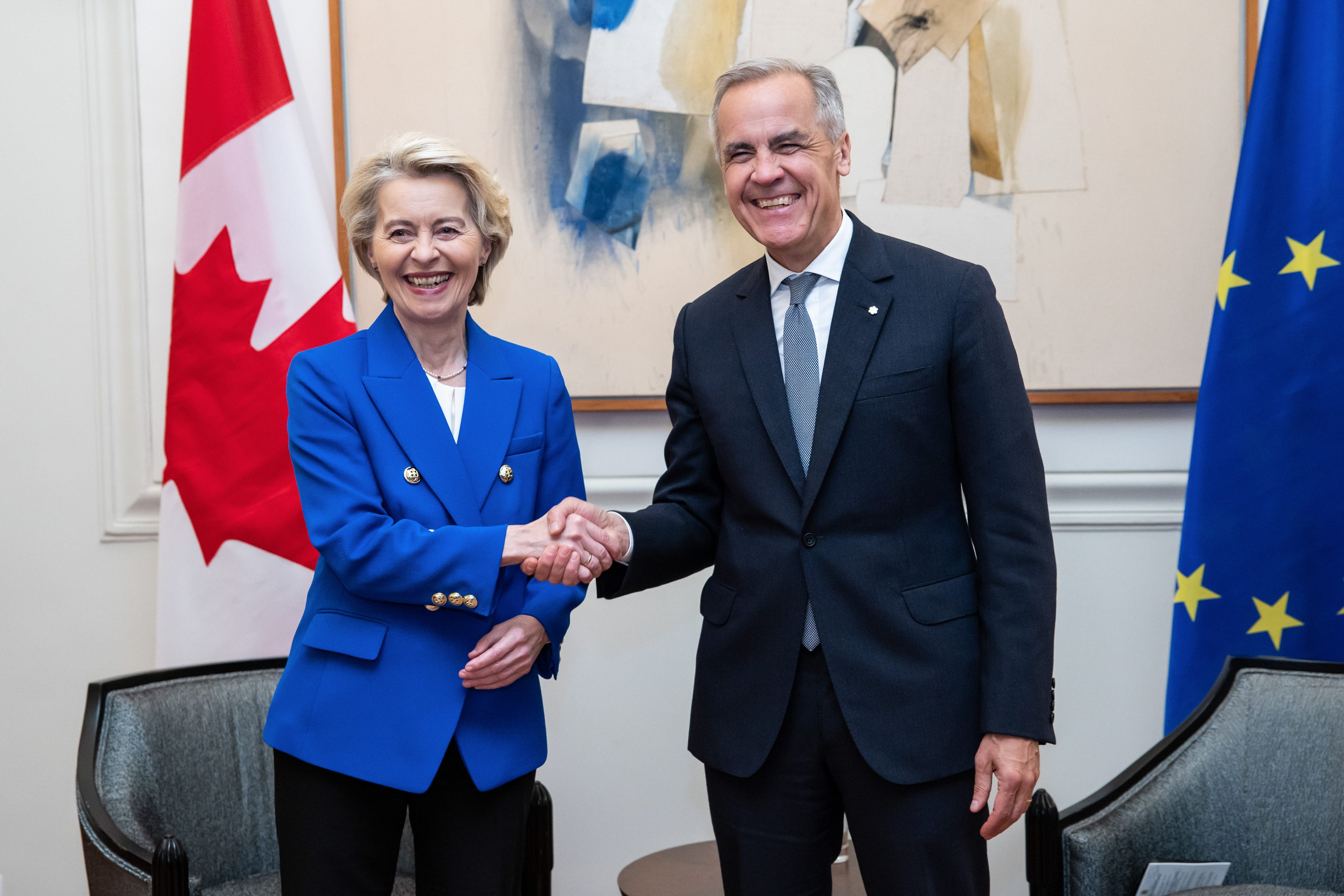
The EU, itself covering around 15-18% of the global GDP, has made it no secret that it is looking for new trade partners away from the traditional superpowers of China, Russia and now the US. At the same time, Prime Minister Mark Carney has made it increasingly clear that Canada is open for business and has recently made headlines in his efforts to form an “anti-Trump” tariff alliance across the globe. Given that Canada is one of the founding members of the CPTPP and may very well be the North American country with the strongest cultural ties to Europe, it seems only natural that Prime Minister Carney is spearheading talks over a possible CPTPP-EU linkage.
This, depending on the agreements between the two blocs, could potentially open market flows to around 1.5 billion people and balloon the two blocs to a free trade area covering around 40% of global GDP ($42-45 trillion). Without a doubt, it would be the largest trading bloc in the world.
Rules-of-Origin Cumulation
The first thing to make clear here is that the EU will not join the CPTPP, but rather piggyback onto existing rules by utilising existing and compatible trade deals. Within the CPTPP, they’ve slashed about 99% of tariffs and other trade barriers on each other regarding preferential goods, which must originate from a country within the CPTPP.
However, the nifty aspect is that they can also claim preferences on products originally originating from other nearby countries, but only if 40-60% of the product’s value has been created in a member country, giving the bloc a degree of flexibility. Furthermore, if the value is added in another member’s country, that product is treated as domestic. All of this is quite complex unless you’re a trade aficionado, but basically if Canada produces steel which is turned into a car in Vietnam (another member), the cars themselves count as Vietnamese and avoids tariffs when sold to Japan (a third member). However, if the steel is sold to Canada from the US, then turned into steel beams to be sold to Japan, it would not receive preferential treatment and have tariffs as most of its value was not created in Canada itself. It helps in closing some backdoors, while also locking in sustainable supply chains within the bloc.
Should the EU-CPTPP deal happen, the EU wouldn’t necessarily become a full member, but rather be counted as an extended zone of the trade bloc where the EU “plugs in.” The rules will be the same for the CPTPP as for the EU, meaning Nordic products would be sold as if they were domestic in, for example, Vietnam. This unlocks new, extensive supply chains as alternatives to China and the US.
What This Means for Us
The Nordics stand to gain from this as the CPTPP seems to be the perfect hedge against US tariffs, particularly on metals. Sweden, should they be able to settle with the Samis and begin excavating new mines, could for example export lithium to Vietnam for processing, which then passes onto Japan for assembly, and in one fell swoop the CPTPP bypasses supply chains which have been dominated by China and the US for decades. The same is true for Norwegian aluminium which currently faces 10-15% American tariffs. Finland and Denmark will be able to ship both machinery and pharmaceutical products through Singapore to the rest of Asia. Furthermore, companies like Ericsson and Nokia will gain access to new Asian markets just as they are being pushed out of China, but thanks to strong IP protections within the bloc they won’t have to be afraid of history repeating itself.
Of course, like with everything, there are downsides, but they come mainly from within the EU. A “two-speed” Europe has of today been all but confirmed by Ursula von der Leyen, meaning a core of at least 9 countries will move ahead with deeper integration, which could potentially sideline Nordic countries that have always preferred to remain somewhat on the outside. This new “core” EU will likely consist of some of the most powerful countries in the EU, among them Germany, France, the Netherlands and Italy, threatening Nordic influence over the terms of the deal. Furthermore, China’s dominance over lithium could be threatened by this deal, risking retaliation to both the EU and CPTPP members such as Malaysia. As China also dominates when it comes to processing, the machinery Sweden would need could become costlier, even with Australian alternatives.
It is clear that the EU has decided that the time for political malaise is far behind us and given the spree of trade deals that have been announced over the previous year, it would not be a surprise if a CPTPP deal would be among them. However, great powers do not like being circumvented like this, so future conflicts with China seem inevitable. The EU has been heading into this collision for a few years now, but this time it is independent of American influence. This deal would be a massive win for Prime Minister Carney, who is leading the efforts, but would also provide the EU with the leverage it so direly needs. Indeed, if you think a little outside the box, the world is full of opportunities even outside the great superpowers.