This Sunday, Hungarians will line up for what could be one of their most consequential elections since the fall of the USSR. Prime Minister for 16 years, Victor Orbán of Fidesz, faces off against the greenhorn and Fidesz-defector Péter Magyar of Tisza. Based on predictions from seasoned analysts all across the world, Magyar has a real shot at ending the seemingly ironclad rule of Fidesz, but that is not to say there are no pathways to victory left for Prime Minister Orbán.
Hungary has over the recent years created headlines over their aggressive use of the veto in the EU, often to the detriment of their neighbours in Ukraine, and has been mired in various corruption scandals that seem to have turned off even some of Orbán’s most ardent supporters. Furthermore, the EU has withheld more than 20 billion euro in funds for Hungary since 2022 due to concerns over democratic backsliding. This represents around 3-4% of its annual GDP and has driven the country into economic stagnation.
Now that the time for change seems imminent, it would be prudent to detail not only what each candidate promises, but also the effects either choice could have on the future of the EU. Will Magyar beat the odds and snatch the throne? What will that mean? Or will Orbán, the seasoned political operator, beat him out in the end?
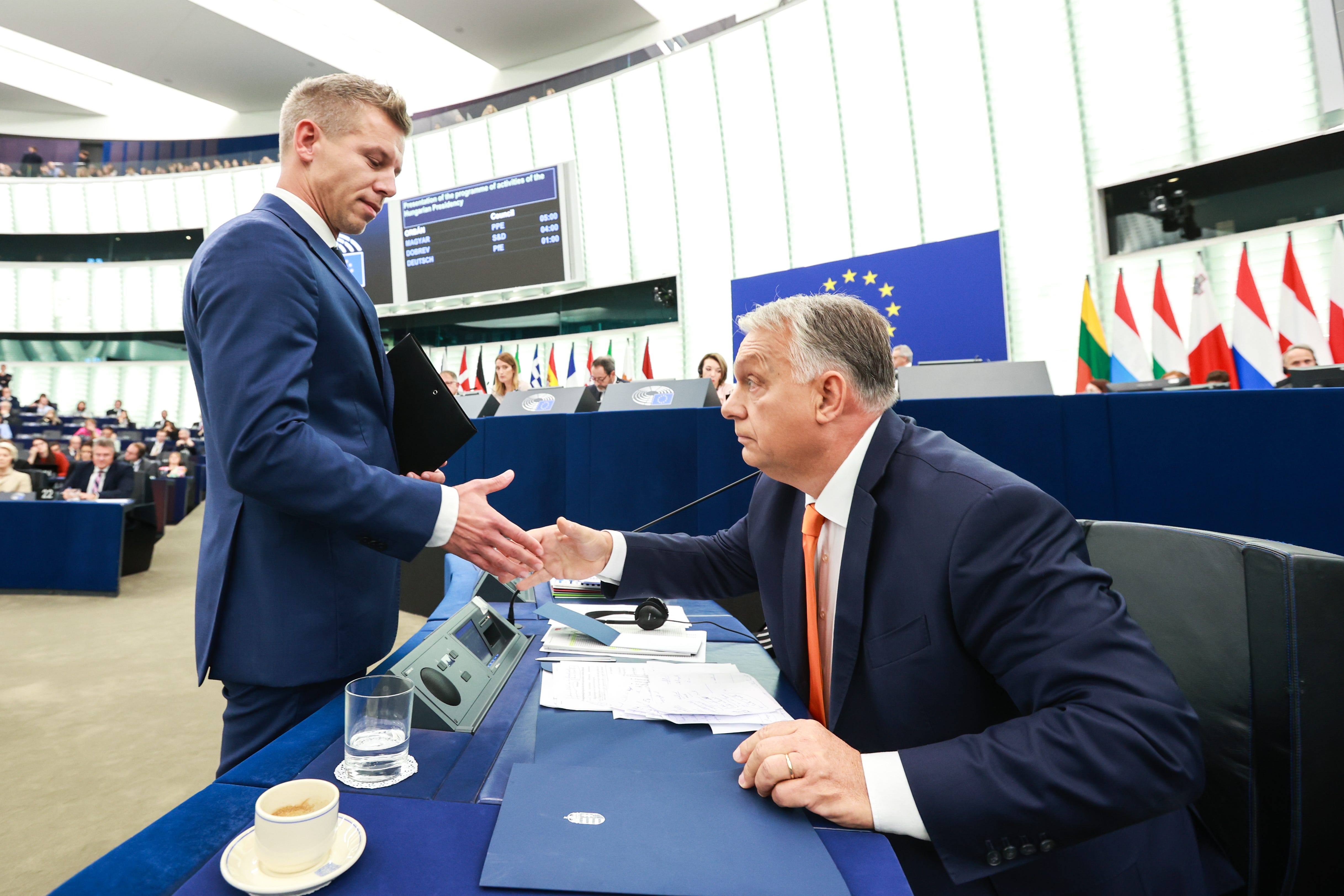
Orbán: the Incumbent Welfare Queen
Orbán’s long career began all the way back in 1988, before the fall of the Soviet Union. While it was considered anti-establishment to be a socialist in Western Europe, on the other side of the Iron Curtain the opposite was true. Fidesz was, back then, a student led centre-right party. Orbán made a name for himself through a passionate speech demanding the withdrawal of Soviet troops in 1989. His turn at power would come nearly a decade later in 1998, which they would lose in 2002, only to then win a supermajority in 2010 after a pivot towards nationalism and hot on the back of the 2008 financial crisis. It was then that he set about his “illiberal democracy” project, making various electoral, judicial and media changes that all aimed to make him virtually unbeatable in an election.
The tide only started turning for Orbán in late 2024, as the frozen EU funds started straining institutions, persistent inflation took a bite out of Hungarians wallets and stagnating wages made the situation untenable for many voters. The straw that broke the camel’s back came when Fidesz’s “family first” messaging shattered following a paedophilia scandal. Orbán’s handpicked president secretly pardoned a man with ties to Orbán’s family, who was accused of systematically covering up sexual abuse at a children’s home. The tape that leaked from this incident launched Magyar’s career, but more on that later.
Today, Orbán’s campaign centres around security and the “stability” he says his government has brought about over the 16 years he’s been in power. He warns of war risks from neighbouring Ukraine, increased immigration and overreach from distant Brussels bureaucrats. While the ballooning budget deficit would imply a need for austerity over the next mandate, Orbán remains firm on generous flagship welfare programs. These include initiatives such as subsidized family mortgages, maternal tax exemptions, and utility price caps. In uncertain times, Orbán frames continuity as the safe and stable choice, which may appeal to loyalists, but whether it will help him maintain power is another question entirely.
Magyar: Insider Turned Critic
While Orbán has a rich history full of twists and turns, Magyar’s story is much shorter but all the more meteoric. A former Fidesz insider and ex-husband to Orbán’s previous justice minister, this 45-year old lawyer launched from relative obscurity into becoming Orbán’s first real rival since 2010 in just two years. His claim to fame comes from the paedophilia scandal that rocked Hungary to its core. After the president had to step down due to the ill-conceived pardon, Magyar leaked an audio tape of his then-wife where she admits to manipulating a major graft case against a close Orbán ally. She even went as far as dictating to prosecutors which evidence to suppress, after pressure from his closest allies.
Using this and the momentum of the paedophilia scandal, Magyar could effectively wash his hands of his former connections to Fidesz and push a narrative of systemic elite corruption. This struck a chord with the financially pressured public. He stands for increased NATO and EU alignment, making the unfreezing of EU funds one of his core promises, and sweeping rule-of-law reforms. Additionally, he’s supportive of increased support for Ukraine (albeit conditionally). He pairs this with a “Hungarian New Deal”, meaning worker tax cuts, hospital modernisations, school upgrades, affordable homes, and deregulation, aiming to outpace Orbán’s sluggish growth. He acknowledges the budget deficit, but believes unfreezing EU funds will more than make up for his own costly promises.
This has resonated with many, making the way for big EU election successes which he surely hopes to replicate on Sunday. In contrast to the passionate Orbán, Magyar is a pragmatic reformer and not an ideologue. Perhaps that’s exactly what Hungary needs?
Which Winner Takes It All?
Although the momentum is certainly on Magyar’s side, the institutional stranglehold Fidesz holds on the Hungarian electoral system makes them nigh invincible. To win he needs a high turnout in order to maximize urban momentum, preferably above 70% (turnout usually hovers between 60-70%), and a 52%+ national vote share to offset Fidesz’s gerrymandering. He will likely also need rural breakthroughs, but they are usually Orbán strongholds. A narrow win is plausible if undecideds break his way, but coalition chaos post-victory risks paralyzing his ambitious proposals before they even have the chance to be implemented. Add to this the fact that most Hungarian media are owned by close allies of Orbán (about 90% of the media is pro-government), and the secret service regularly harasses Magyar. The task ahead is not insurmountable, but the climb is indeed very challenging.
On Orbán’s side, things are not looking too bright either, but electorally his challenge is much less severe. Recent surveys (as of early April 2026) show Tisza at 49-51% among decided voters, Fidesz at 37-42% and 18-26% are undecided. Even with these abysmal numbers for Fidesz, most analysts believe it comes down to a coin flip due to the heavily gerrymandered system and historically low opposition turnout.
So, what can we expect for either scenario? Should Magyar win, Brussels would likely collectively breathe a sigh of relief. Although Magyar has his conditions, the leaders of the EU expect him to be much easier to negotiate with, particularly considering his need for the frozen funds to support his lofty goals. It would likely spell the end of the era of Hungarian stranglehold on the EU, and they will probably want to speed up the pace of their own ambitious reforms using this breathing room.
With Orbán, however, the EU can expect more of the same, if not worse. Over the last two weeks, leaks have shown just how deeply tied the Hungarian government is to Russia, sending classified European information directly to them, and Orbán comparing himself to a mouse in Putin’s lion-like presence. Furthermore, now keenly aware of how thin his grip on power is, he’s likely to launch further legislation to entrench his power deeper. At that point, the EU will have to contend with a serious, existential question: how far is too far?
There is currently no mechanism to expel a member, but colluding with a foreign adversary, sabotaging political processes from within and becoming authoritarian (if not dictatorial) should surely give the EU pause for consideration. After all, how could they earnestly hold candidates to higher standards than their own members? In the end, this election may be of far greater historical consequence to the EU than to Hungary itself.