“But yesterday, our friendship rose to such a high level that I can help in any way. [...] There is a story in our Hungarian picture books where a mouse helps a lion. In any matter where I can be of assistance, I am at your service.” - Victor Orbán, in a leaked conversation with Vladimir Putin, October 17, 2025
It was an unusually warm day on October 3rd, 1956, when The Hungarian Revolution was sparked. A peaceful, student-led protest grew into a gathering of over 200,000 people demanding freedom of the press and the withdrawal of Soviet troops. It culminated in the protestors storming a radio station where a politician had just made some inflammatory remarks, and the next day Soviet tanks rolled into Budapest. 2,500 students would die that day, and 200,000 were forced to flee. It is remembered as a brave act of rebellion towards a cruel, repressive regime far removed from the struggles of ordinary Hungarians. Their courage brought about an era of so-called “goulash communism,” marked by its economic liberalization.
Nearly 70 years later, Hungary may rise again.
This election has been the subject of an unusual amount of attention, and not because of the various television-worthy scandals and sordid tales of corruption. Why, then? Hungary is not a big country, with around 9.6 million people. They don’t produce anything particularly noteworthy nor do they have a monopoly on some rare but crucial product. While it is a gorgeous country, its landlocked position somewhat limits its potential for tourism. If it has not been made clear yet, it’s because of its membership in the EU, and its leaders’ willingness to be sold.
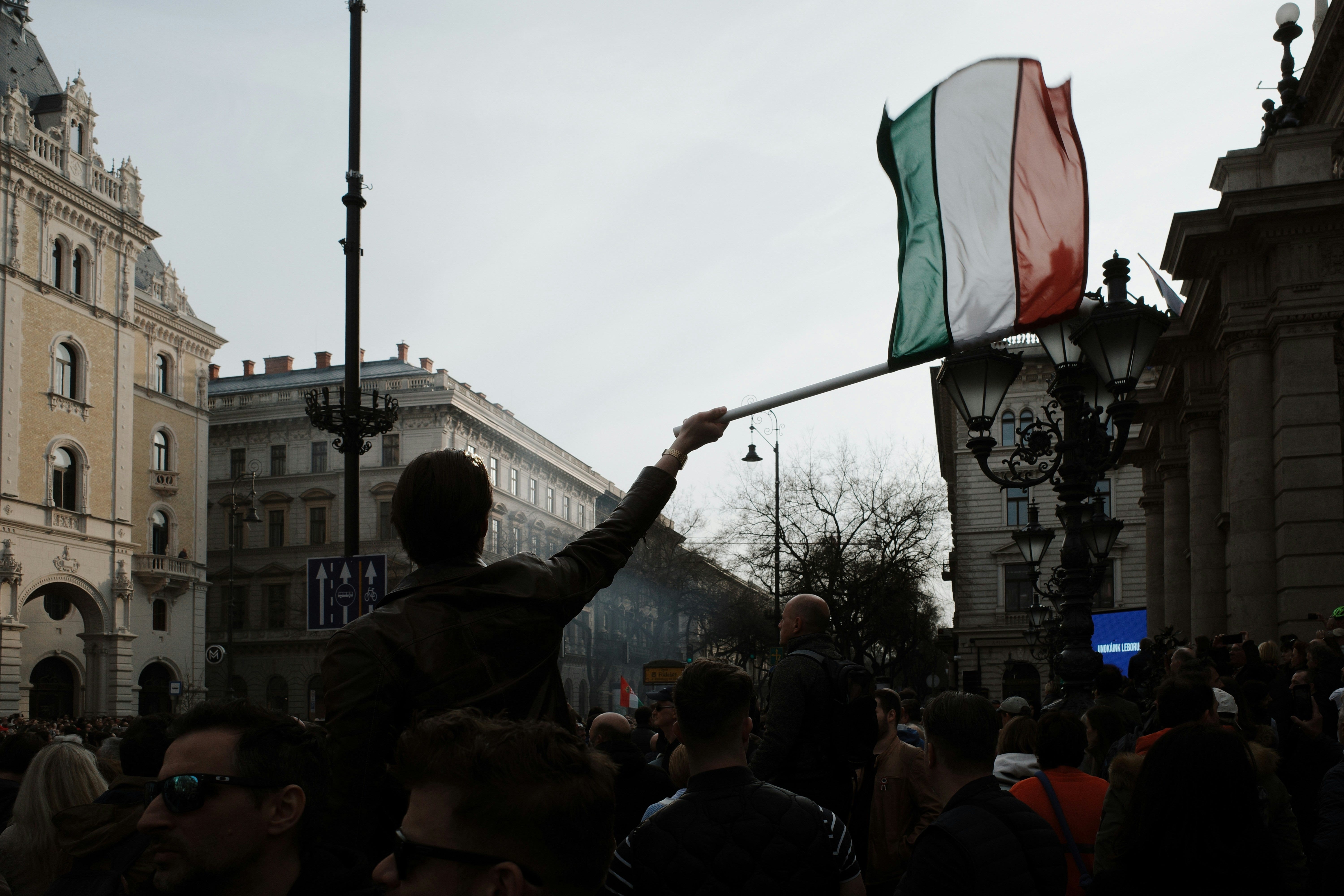
Different Play, Same Actors: Why Hungary Matters
I have always believed that the EU is an emerging superpower. This election has done nothing if not prove this thesis: it is not simply a vote on the future of Hungary, but of the EU. When it comes to particularly sensitive questions, such as security or enlargement, each member of the union has the right to veto, and Prime Minister Orbán has been particularly profuse with the use of it, often extracting various benefits or exemptions in exchange for dropping his obstruction.
For Moscow, Washington DC or Beijing, influencing a single capital like Budapest is a high-yield, low-cost investment compared to the impossible task of lobbying the entire European Commission. This “backdoor” into the world’s largest single market allows an external actor to bypass the EU’s front gates, using a single “no” to paralyze the collective “yes” of 450 million European citizens. Global powers do not spend political capital on irrelevant bureaucracies. The interference in Hungary is, therefore, a form of backhanded compliment to this budding rival of theirs, while simultaneously an indictment on the structure of the EU, that its own design can be so easily exploited. Ironically, the very thing that is central to Orbán’s significant geopolitical power is also the thing he denigrates most in his campaign.
Future Paths
While this is indeed a very important election to the EU, the outcome does not actually matter very much to the core issue: the EU is very vulnerable to divide-and-conquer tactics. Sure, Magyar may win and so one of Russia’s major pathways into the union will be shut, but Prime Minister Fico of Slovakia remains in power and could take over the role of obstructionist within the EU, as he already has to some extent. He is equally as pro-Russian as Prime Minister Orbán (and just as unpopular domestically).
No, the central question that the EU would do well to remember is how to rein in rogue members, of which there will surely be more in the future. The freezing of funds may have worked in this case to punish Orbán and bring about regime change, but it also takes far too long to bite. By the time cohesion can be reached again, it may already be too late, and the consequences could be severe. Should Prime Minister Orbán manage to cling onto power, he may for example continue using his veto to block the 90 billion euro promised to Ukraine, which could have troubling effects on the frontlines. Or he may enact further reforms and legislation designed to make it even harder to vote him out, and what then?
At the same time, whatever tool the EU could use needs to be constructed in such a way that the Commission could not use it to enforce uniformity. Respecting a “no” from members remains, and must continue to be, an essential right, and small countries do need a way to shape European policy. Short of complete constitutional overhaul, the EU needs a reform that allows the union to bypass vetoes in particularly urgent matters, while respecting sovereignty.
Should no more than three countries use their veto, the parliament should have to vote on whether to let the veto stand (if more than three use their veto, this should not be eligible for a parliamentary vote as there is clearly a broader interest that needs to be negotiated rather than bypassed). The parliament should need a qualified majority to strike down the veto. The EU also has the right to temporarily suspend voting privileges of certain members, something they may be forced to consider should Orbán win.
Either way, such a reform would fundamentally change the calculus for external actors. If Moscow, Washington, or Beijing realize that “buying” a single capital is no longer sufficient to derail whichever legislation they want derailed, they will be forced to reconsider their strategy. However, this idea is not without flaws either. It risks entrenching cliques within the EU that could themselves also cause havoc, but it does raise the cost of investment for foreign actors.
History is rarely linear, but it is often poetic. In 1956, the tragedy of the Hungarian Revolution was that the world’s rising powers stood by and watched as a small nation’s quest for sovereignty was crushed by Soviet tanks. Today, the tragedy is that the heirs of that revolution have turned that hard-won sovereignty into a commodity for sale to the highest bidder.
As voters head to the polls in this unusually significant 2026 election, the stakes transcend the borders of Hungary. This is a taking the temperature on whether the European Union will be able to embrace its destiny as a global hegemon or remain a giant paralyzed by its own design.
No matter the outcome of tonight’s elections, a true superpower would do well to know when it is time to stop playing the game and start leading it.